Sunday, April 28, 2013

Two Years Made

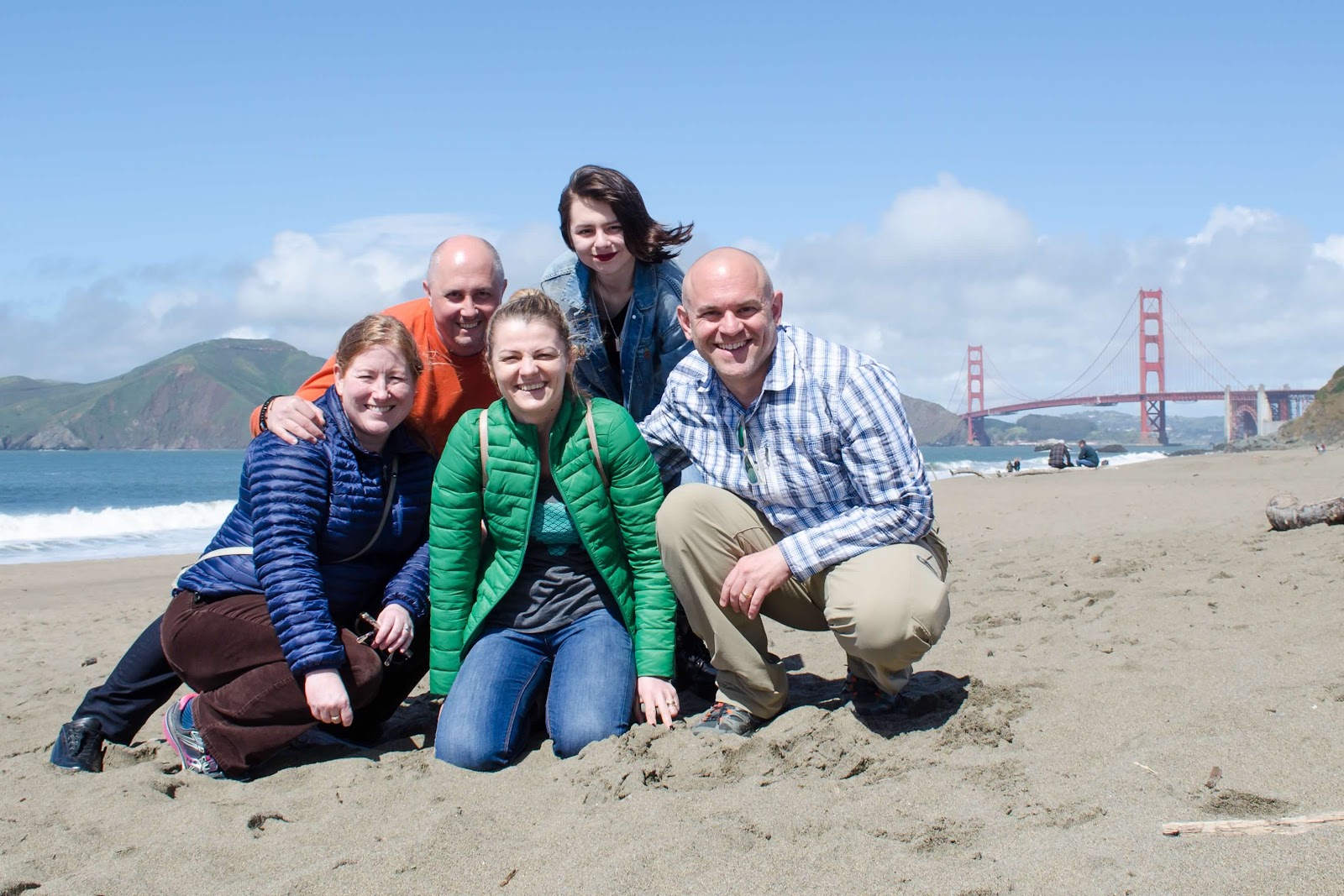
I can't believe today marks our two year anniversary in Romania! It has been an intense ride that has pushed us beyond what we thought was possible. We've made new friends, learned a new language, lived on $600 a month, and hopefully brought a little more peace and understanding to the world. We never could have accomplished this without the support of our beloved Peace Corps Romania Group 28. We did it!


Monday, March 25, 2013

Vlădeni Pulls Out All the Stops


This all started months ago when I had the idea that I would like to try to dye Easter eggs in the Moldovan style. I knew a fellow volunteer, Grant, had friends who were experts at this, and I hoped that they would enjoy sharing their heritage and tradition. It turns out that his village, Vlădeni, Botoșani, wanted to share much more than just egg painting with eight Americans.

An army of Americans invade Vlădeni!

As we walked through the door, each of us broke off a piece of traditional bread, called a colac. It was beautifully made, braided with care into a circle, symbolizing the infinity of God or the shape of the sun. We were warmly welcomed guests in this place. As I looked around, I could immediately see that they had pulled out all the stops for us.

Welcomed with Colac

In the center of the room I saw a table piled high with fresh fruit, cakes, bread and pitchers of wine and țuică (homemade brandy). Under this bounty was a hand stitched and embroidered tablecloth. The more I looked around, the more I saw small items that had been brought in especially for us to see, including beautiful pottery, traditional wall hangings, and an antique telephone.

Prepared Just for Us

We were given traditional, colorful bags, which contained a program in both Romanian and English that described our plan for the day and the tradition of dying Easter eggs. Then we were ushered to sit down and relax for a few minutes. There was a round of introductions and speeches, and we realized that our hosts included the mayor, vice mayor, school director, a priest, and even guests from Ukraine. There is an old saying here in Romania that the Americans would come and rescue them from the Soviet influence. The joke was that on this particular day both the Soviets and the Americans had invaded Vlădeni. Thankfully we both came in peace.

As I looked around the room more carefully, I started to discover the full extent of our options for the day. Over the past weeks, the town of Vlădeni had put together five different traditional activities for us to enjoy for the day. Set up in stations, we could choose from egg painting, opinci (shoe) making, weaving a traditional covor (rug) on an ancient stativă (loom), baking mucenici (a special type of bread), and last but definitely not least tasting the plăcinte (cakes) and băuturi (drinks) available on the main table.

When we were given the word, we all scattered. I went straight to the baking station and was immediately put to work cracking eggs. There were two women from Vlădeni who began to relate the story of the 40 Martyrs (sometimes called the 40 Saints). The holiday occurs every year on this day, March 9, and we were baking a special bread called mucenici (which means martyrs) to celebrate their life and sacrifice. The bread is rolled into long thin cylinders, braided, and made into an eight (some say infinity). Mine turned out quite plump and one of the women joked with me. She said “Oh! We’ve got a fat American, but it will work.”

After some time baking, I went to see what was happening at the egg painting station. I would have to be careful not to crack eggs here! I found here that Grant’s knowledgeable friends were four 5th grade girls, and they were dying up a storm. They had even prepared a cheat sheet of patterns for us. The secret to dying eggs in the Moldovan style is that you paint wax onto an emptied eggshell. The wax acts as a barrier to the dye, so you paint the wax over the color you want to keep. In other words, the first layer of wax will stay eggshell white. You can repeat this process as many times as you like, for incredibly detailed and colorful patterns. The girls, who have been practicing for more than half their
lives, have hands as steady as a surgeon’s. We Americans have years to go before we can make anything close to their amazing creations, but we gave it our best.

Egg Painting

Once I put my egg in for its first round of yellow dye, I went over to the loom. As I sat down, a wonderfully animated woman rapidly described all of the parts and their purpose. After all of it, I was able to remember one word – stativă, the word for loom in Romanian. I had previously learned the word război for a loom, but she assured me that a război was something else entirely. I’m sure she knows what she’s talking about! The loom was made of wood and held together with twine, and seemed about ready to fall apart. But when we got working, my guide insisted that I put my back into it. Thankfully the apparatus held up with no problem. I shouldn’t have been surprised, since most of the women present were stronger than me from a life of incredibly hard work on their farms. I never did figured out how the loom fit together; there were just too many moving parts, pedals, and threads. With her help, I did a few rows and headed back to check on my egg.

Jennifer Spins Yarn

Anthony Weaves a Rug

After another round of painting, I dropped my egg in the red dye and went to see what was happening at the opinci making station. Opinci are traditional leather shoes, and I found Jenn showing off her completed pair. With the pointed toes on her shoes, she looked a little elfin to my eyes, but beaming with pride all the same. I did not have time to make my own shoes, but I watched for a while as holes were made in the leather with a hammer and a large nail, and then they were sewn together with a coarse leather thread.

Finally, I made my way back to dye my egg one last shade of blue, causing the exposed red to turn purple! And then it was time to relax and sample the various foods and drinks available to me. Many of the cakes and drinks are very commonly found here in Romania, such as sarmale (cabbage rolls), plăcinta (a traditional cake), colivă (a wheat dish with the consistency of oatmeal), and homemade wine. Țuică is a brandy normally made from plums, but I tried two new kinds: one made from beets that smelled and tasted very much like its source, and another made from the leftovers of the winemaking process that was much more neutral.

Theron's Egg

Of all the amazing things that I was privileged to learn in Vlădeni, what I will remember forever is the pride the community has in the traditions which they have passed from generation to generation. As our world becomes ever more modern and fast paced, we are tempted to forget the importance of culture and tradition. How easy it would be to replace hand painted eggs with paste-on decals. It is such a beautiful thing to see a place that not only keeps their traditions alive but thrills at the chance to share them. I am confident to say that we would be welcome back to Vlădeni as soon as we can return. They are waiting for us.


Sunday, December 23, 2012

Jingle Bells

It started out like any other day. That is, until the phone rang at 7 AM and pulled us from our warm and happy sleep. Lucia was on the other end, urgently telling Sarah that we had exactly one hour to get ready to go to the country and kill the Christmas pig.

How to dress is always a question when we go to the country in the winter. We know it's going to be incredibly snowy and cold outside, but we also know that the wood stove is going to be baking inside. The key is to dress in layers so that we can find a way to be comfortable in any situation. I put on three layers on the bottom, five layers on the top, and two pairs of socks. It wouldn't be enough.

Time for a quick geography and civics lesson. Small towns in Romania are organized into communities, normally named after the largest village in the community. Lucia's sister, Mirela, lives in the community and village of Păstrăveni. Her parents live just down the rutted dirt road in the same community but in the village of Lunca Moldovei.

We stopped quickly at Mirela's to pick up her husband so that we would have enough manpower to handle the pig, and we started off for Lunca Moldovei. In the best of conditions, the road is rough, but we've been getting hammered with snow lately. Right now the road is just wide enough for a single car, with 3-6 foot embankments of snow on either side.

We were about 1/2 mile into the drive when we encountered a car that had been heading towards us, high centered and stuck, with a horse cart waiting behind it. This is the very definition of a Păstrăveni traffic jam. The car was easy to get moving again, but we were warned to discontinue our porcine pilgrimage so we turned back, defeated.

Defeated, that is, until someone thought of Ionel and his one-horse open sleigh. We stopped by his house to find his wife home alone. She sadly informed us that Ionel couldn't help us, because he was currently playing Santa Claus at the local school. I kid you not. If we were patient and played our cards right, we might get to dash through the snow, o'er the fields, in Santa's one-horse open sleigh. Would it be too much to ask that the horse would have jingle bells? No. It wouldn't. And I can personally attest to laughter all the way.

So, back to Mirela's for a few minutes while we waited for all of the Santa Clausing to finish up. Did I mention it was cold and snowy? So cold and snowy that in the span of 30 minutes the house lost power and the water stopped running. Mirela's husband, Costel, boiled snow on the fire to try to warm the pipes so that the water would flow again. Just another day in the Romanian countryside.

After a while, Lucia's brother, Vali, gave Ionel a call. Vali knows how to motivate. The conversation went like this: "Hey Ionel! I just got into town from the seaside. Come on over to my sister's. We've got beer! Oh, by the way, bring your sleigh."


"Ionel" means "Little John." Yeah, right. This man is a titan. A colossus. A giant. When he shook my hand, I remembered what it felt like to be a child whose hand was devoured by an adult's. After he arrived, we quickly hopped on the sleigh. As I was climbing aboard, the sleigh started to move and I immediately fell off. Since nobody noticed, I had to run for it and hop on before they were gone for keeps.

At this point I began to wish that I had literally worn every article of clothing that I own. The wind and blowing snow from the field was colder than anything I have ever felt. It couldn't keep us all from laughing and singing sleighing songs, though! Because the snow was high and the going was so tough for the horse, we could actually hop off the back of the sleigh and run a bit to keep warm.


When we made it into Lunca Moldovei, we cheered, and vowed to warm ourselves by the fire, pardon the pig for a day, and immediately go back home. The weather was too bad and the day was quickly turning into afternoon. We just didn't have time to finish the job. But you know how it goes. You get warm and comfy by the fire and you feel like you can do anything. The pig was about to be in for some bad news, and Ionel was the messenger, as he had been for 7 other pigs already this year. Time of death: 12:37 PM, December 20, 2012.

A pig slaughter is a long, complex business, and I had the stomach to witness the whole thing. If you want the gory details, you can read them on Jeremy's blog. In the process, I learned that there is a single word in Romanian that means "to burn the hair off of a pig" (a pârli). I can also say with certainty that you haven't lived until you have washed down a bite of fresh pig skin with a shot of moonshine, using the hollowed out hoof of said pig as a makeshift glass.


About halfway through the process, the pig is covered in a blanket "to rest." This is the time for the photo op and for everyone to come out and take a ride. I think every family has a slightly different belief on what this accomplishes. Ionel promised me increased sexual powers for the new year. See how happy I look?


As the sun was getting lower and lower in the sky, someone made the astute comment that horses do not have headlights. Lucia had to work the next day back in Pașcani, so we had to get home. But there was still work to be done. Lots of work. I have learned to relax in seeming crises like this, because the Romanians are relaxed. But this time it was different. Lucia was visibly agitated, and Costel seemed downright worried. If the weather got any worse, and we were out after sunset, it could get dangerous fast.

Part of the "work" was eating the traditional first meal. Nobody would dream of skipping this, no matter how dangerous the weather might get. And if there is one thing I know about Romanians, a meal is never rushed. The first meal with the pork is called friptură, and it is a mixture of meat and fat thrown into a giant cast iron pot and cooked over an open fire. It is eaten with mămăligă (polenta) and pickled cabbage. The rest of the pork will be salted, smoked, turned into sausages or soap, or eaten right away for Christmas. Ionel gave a prayer before the meal, a few more glasses of moonshine were poured, toasts were said, and we tucked into a feast.


As we said our goodbyes and hopped on the sleigh again, dusk was just starting to fall. A plow had cleared the road. Costel and Lucia had been seemingly worried for nothing, but we weren't quite home yet. About half way home, we encountered an abandoned car blocking the entire path. We all jumped off the sleigh to assess the situation, and just as we did, the horse decided to go for it and take the most direct route through the 3 foot snow bank. He didn't seem to remember that there was 15 foot sleigh attached to him that also needed to clear the car. With a lot of heaving and hoeing and shoveling snow by hand, we managed to get the sleigh in the right place. It came within an inch of side swiping the car. Worse, Ioan was almost trampled in the process. But on we went.

Thankfully, on this cloudy night the horse didn't need headlights going through the snowfield; it was still bright, long after the sun had been extinguished behind the snowy hills in the distance. I took a moment to relish the silence and beauty surrounding us, a silence broken only by the soft jingling of sleigh bells and the quiet laughter of great friends.

Sunday, December 9, 2012

Look Closer


Dumbrava Loredana

At the end of the last school year, I remember thinking that I was yearning to do something more as a Peace Corps volunteer. I was happy to have made it through the year as a teacher, but I felt like all of my secondary projects were either small or I was just helping out on someone else's project. If I had finished my service then, I wouldn't have felt like a failure exactly, but I definitely would have left unsatisfied.


Inside, Ioan Agripina

I tried to think of a passion of mine that I might have in common with some students, and so I started a photography club. Now, I can look back on the first semester and easily say that this project has made me feel like a successful and happy volunteer. (Thanks to Evie and RPCV Sara for their cameras - we use them every week!)


Toma Marta

Here are some things I have learned while doing this project:
  • There is a reason that Peace Corps service lasts for two years. The first year I was getting comfortable with the language, culture, my job, my students, and my town. By the time I decided to start the club, everything was in place and it was easy to get it off the ground. 
  • I prefer "teaching" English in an informal setting, outside of the classroom. The students are engaged in what we're doing and we end up communicating without forcing anything.
  • My students are incredibly creative and talented photographers! I think I am learning more from them than they are from me.


Ionița Vlad

Every week we go on a photo walk looking for interesting images, and last week was my favorite one. It had snowed a little in the morning, so I was hoping that we would get our first shoot with snow on the ground, but unfortunately it melted. On our walk, we were milling about the town center and I was desperately looking for something to liven things up. I wondered aloud to one of the kids if they thought we could get into one of the rooms on the top floor of the hotel, just to see the world from a different perspective.


Loghin Elisei

None of the kids really thought it would work, and frankly I didn't either. But I also figured that it couldn't hurt to ask. The worst that could happen is that the receptionist would look at us like we were crazy and then say no. Instead, she looked at us like we were crazy and called security.


Muscalu Alexandra

Thankfully she wasn't calling security to kick us out. She was calling to see if they would help us. The guard actually took us up onto the roof and hung out with us while we were up there. And instead of missing out on the first snow of the year, we got to see it on the peaks of the surrounding hills.


Gabor Sabastian Alexandru

As we were finishing, one of my students turned to me and asked, "How did you know he would let us up there!?" I said, "I didn't know. I just thought it was worth asking, and what did we have to lose anyway? Not asking would have the same as if they had told us no." For me, it was a great moment where I got to teach the benefits of confidence and having the courage to try for something unexpected. The security guard told me that we were the first people that had ever asked to go up to the roof.


GuitarRobo', Panainte Maria

I hope you enjoy a few of the photographs that I have sprinkled throughout this post. To see more of their incredible work go to our Facebook page. Here's one from the hotel rooftop!


Doroftei Bianca

Monday, December 3, 2012

Traditional Costumes


A few weeks ago, Theron and I were lucky enough  to dress in traditional costumes specifically from Pașcani. Below are pictures of volunteers in costumes from all over Romania. While Romania is only about the size of Colorado, the costumes vary widely from village to village. You'll notice that Romanians like to mix prints. This explains a lot about current Romanian fashion.


Theron, Sarah, Stephen, Kelly, Matt, Melissa, and Anthony (Pașcani)

Andrea (Novaci)

Ellie (Bicaz)

Kevin (Sarasău)

Melissa (Suceava) and Jovanka (Sângeorz Băi)

Chips (Baia Mare)


P.S This post goes out to Heather. 


View Costume Map in a larger map

Friday, August 17, 2012

10,000 Views

We're proud to have had 10,000 views to Two Years in the Making! One of the three goals of Peace Corps Romania is to promote a better understanding of Romanians on the part of Americans. We're proud to say that we've done this and more. People from 65 countries have read our stories. Who knew so many people would be interested in our Romanian adventure?


I'm also gratified that our most popular post, Orange Curtains and Red Pleather has earned us the first page when you google "orange curtains." Try it!

Tuesday, August 14, 2012

House of Stone

One of the highlights of our summer was being included at the wedding of Vic and Bianca, part of our adoptive Romanian family. Weddings here are a 24 hour affair and include a lot of traditions. Here are a few.


The wedding day starts with a small party at the bride's house. The bride and grooms' rings are put in a bowl of wheat grain. The grain represents abundance for the couple. The bride and groom search for their rings using their pinky fingers. The one who finds his or her ring first will be the most hardworking of the couple. It seems to me it would be better not to find your ring!


Vic and Bianca find their rings.


In Romania, the bride and groom have spiritual godparents. Our closest friends, Lucia and Cristi, were Vic and Bianca's godparents. In this picture, Lucia is making the sign of the cross while holding a special bread (called colac) over Bianca's head. She then throws the bread in each direction of the cross. This foreshadows the wedding ceremony when the priest will crown the bride and groom. The throwing of the bread shows the bonds between the family and the couple. It meant a lot to me that I was one of the people to whom the bread was specifically thrown.

Lucia throws the bread over Bianca's head.

Sarah catches the bread.


After this first party, the family goes to the mayor's office to make their wedding official. There's another small party there. Then everyone goes to the church for the religious ceremony.


Bianca is crowned by the priest and Lucia, her godmother.

As part of the wedding ceremony, the couple, the godparents, and the priest dance a traditional Romanian dance (horă) around the altar three times. If the bride steps on the groom's feet, she will be the head of the household. If the groom steps on the bride's feet, he will be the head of the household. Bianca stepped on Vic's feet three times! No one was surprised.

When the couple leaves the church, they carry large candles which burned throughout the ceremony.  They extinguish them on the top of the door frame. The goal is to extinguish the candles at the same time, because the person who extinguishes his or hers first will be the first to die. Again, I'm not really sure being first is ideal.


Vic and Bianca extinguish their candles.


Around 9 pm, the reception begins. Interestingly, there's no expectation that guests go to both the ceremony and the reception. It is more common for people to just go to the reception.  It includes a five course meal with dancing between each course.

Towards 2 am, the bride is stolen by friends. (They don't have groomsmen and bridesmaids here.) I seem to remember that my parents were stolen at their wedding, so I'm guessing this custom is also Czech/German/Polish. In order to rescue the bride, the groom must drink champagne from the bride's shoe. 

Vic drinks champaign from Bianca's shoe.

Towards the end of the reception (about 5 am), the bride's veil is removed and replaced by a headscarf. This symbolizes her transition from a "Miss" to a "Mrs." In the countryside, married women still wear headscarves. 

In Romania, they also throw the bouquet, but both unmarried guys and girls can catch it. The bride's brother, Alin, caught the bouquet this time around. He and his girlfriend, Roxana, are considered the next in line to be married. To symbolize this, Bianca's veil was put on to Roxana and Vic's boutonniere was pinned on Alin. We'll see if they're really next!

Alin and Roxana receive their boutonniere and veil. 

Casa de Piatra, Bianca și Vic!